
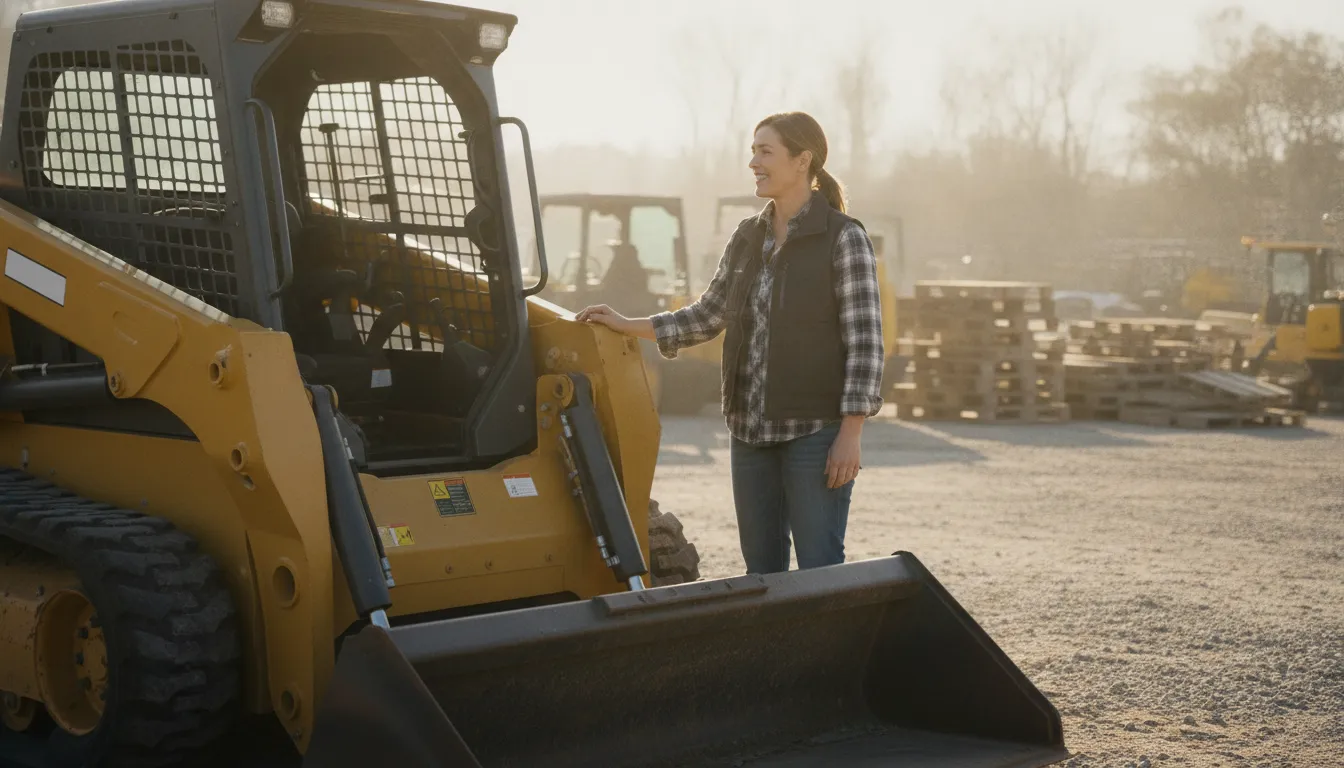
Used equipment financing is a way to spread the cost of pre-owned machinery, vehicles, or tools instead of paying the full price in cash. Before you sign, inspect condition, confirm value, collect the paperwork, and test whether the payment fits a normal month.
Talk with a Lyft Capital financing specialist about used equipment financing.
A clean inspection and a written quote do more for an application than a hopeful price. Lenders look harder at used assets because age, wear, and resale value are less certain than they are on new equipment. The checklist below is the work to finish before you ask for terms.
What Used Equipment Financing Covers
Used equipment financing pays for a business asset that already has operating hours or prior owners. The asset is often the collateral. That can make the purchase easier to fund than an unsecured working-capital need, but it also means the machine’s condition can change the amount, the term, or both.
Owners use it for excavators, loaders, trucks, kitchen lines, medical devices, and shop tools when a used unit does the job at a lower price. The lower sticker is the draw. The tradeoff is shorter useful life, repair risk, and a resale number that a reviewer can challenge.
Financing is not the same as finding the machine. You still choose the seller, confirm what you are buying, and decide how the asset will earn its keep. The financing decision comes after that work, not before it.
Lyft Capital finances business equipment such as excavators, loaders, tractors, mowers, trucking equipment, skid steers, dozers, and utility equipment. The live equipment page lists no maximum amount. Approved eligibility for this product is two years in business, $400,000 in annual revenue, and a 660 minimum credit score. Approval and funding timelines are subject to review. A vendor invoice is part of the file.
Inspect Condition Before You Request Terms
Start with the machine, not the rate sheet. A low price on a tired asset can cost more than a fair price on a maintained one once repairs, downtime, and a shorter term are included.
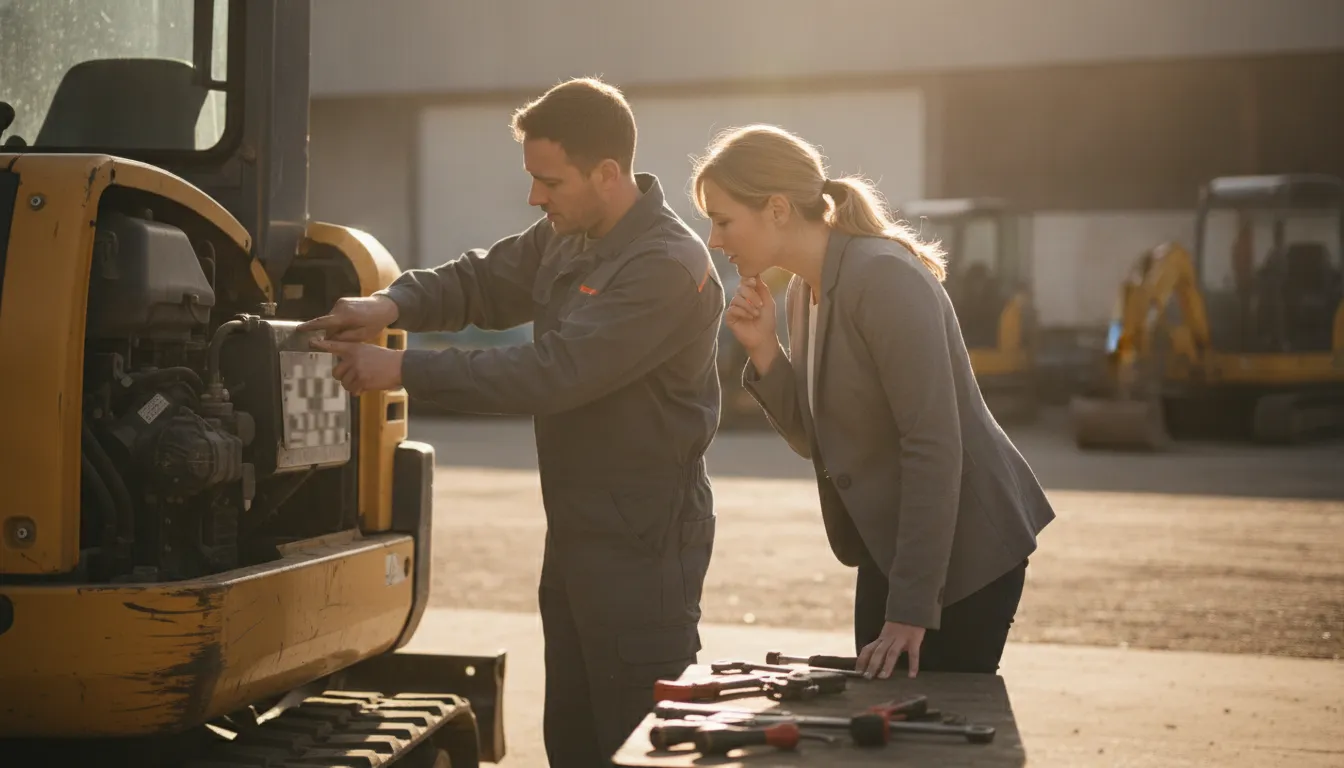
Walk the asset in person when you can. If you cannot, hire an independent inspector who works for you, not the seller. Ask for hour or mileage readings, service records, and any open recalls. Photograph serial plates, wear points, leaks, welds, and tires or tracks.
Match the inspection to how you will use the asset. A landscaper who needs a mower three days a week faces a different risk than a contractor who will run an excavator all season. Write down the repairs you would make in the first 90 days and price them. Those dollars belong in the budget next to the purchase price.
Also ask what a breakdown costs in lost jobs, not only in parts. If one failed hydraulic pump idles a crew for a week, the “cheap” unit is not cheap. Build a repair reserve before you accept a payment.
Condition checks that change the offer
- Hours or miles compared with similar units of the same year and model.
- Maintenance logs, not just a verbal promise that it was serviced.
- Structural damage, frame cracks, flood signs, or mismatched serial numbers.
- Whether wear parts, tires, tracks, or batteries are near replacement.
- Remaining useful life versus the term you hope to finance.
If the seller will not allow an inspection or will not share records, treat that as a reason to walk away. A reviewer who cannot see condition has little reason to trust the price.
Confirm Value With More Than the Asking Price
The asking price is a starting point. Used equipment financing is underwritten against what the asset is worth and what it can be resold for, not against what the seller hopes to get.
Collect at least two comparable sales for the same type, age, and rough condition. Dealer listings, recent auction results, and a written dealer appraisal all help. Note what is included: attachments, delivery, installation, and tax can move the number by thousands of dollars.
Separate the purchase price from the amount you need financed. Transport, rigging, installation, first service, and insurance often sit outside the asset price. If those costs are real, put them in the budget. Do not assume every add-on can be financed. Ask before you rely on it.
A worked example keeps the math honest. Say a used skid steer is listed at $48,000. Delivery is $1,200, and the inspector flags $2,500 in near-term wear parts. Your all-in number is $51,700 before any down payment. If similar units sell closer to $44,000, the $48,000 list price is already rich. Financing the gap does not make the gap disappear. It only spreads it across monthly payments.
If your price is far above recent sales, expect a smaller advance, a larger down payment, or a no. That is a valuation issue, not a verdict on the business. Renegotiate, or pick a different unit.
Collect the Paperwork a Reviewer Will Ask For
Paperwork proves three things: you can buy the asset, the seller can sell it, and the payment has a place in the business. Missing any one of them slows the file.
For the asset, gather a vendor invoice or bill of sale, the year, make, model, and serial number, and the inspection or service file. Ask whether a lien search has been done. You do not want to finance a machine another lender still claims. Title or registration rules vary by asset type and state, so confirm what your seller and your state require before money moves.
For the business, be ready with basic ownership details, recent bank activity, and a plain description of how the equipment will be used. Lyft Capital’s equipment application is a short online form, and you upload the vendor invoice as part of that file. A specialist may still ask for more during review. That request is normal. It is not a promise of approval.
Private-party sales need extra care. A dealer invoice is cleaner than a handwritten note. If you are buying from another owner, get a bill of sale that names both parties, the price, the serial number, and a statement that the seller has authority to sell. Keep the inspection report with that packet.
Test Whether the Payment Fits the Work
A payment that looks fine on a peak month can strain a slow one. Used equipment financing should be judged on a typical month, after payroll, materials, insurance, and a repair reserve.
Write one sentence you can defend: this asset earns or protects a specific dollar amount each month, and the payment is smaller than that with room left over. If you cannot write that sentence, the unit is a want, not a fit.
Use round numbers. A restaurant replacing a $30,000 used line might expect the new setup to protect about $4,000 a month in sales it would otherwise turn away. A payment near $700 can fit. A payment near $1,500, plus a repair reserve, may not. The right test is cash in a normal month, not hope in a busy one.
Term length should follow remaining life. A short remaining life argues for a shorter term so you are not paying for an asset that is already out of service. A longer term lowers the payment and raises the total amount paid. Neither is automatically better. Match the term to how long the unit will keep earning.
Down payments are a negotiation, not a moral test. Lyft Capital’s equipment page lists no down payment requirement, and final terms are still subject to approval and review. On a used unit with thin resale value, a reviewer may still ask you to put cash in. If you cannot, say so early and look at a different structure.

Compare the Financing Paths Side by Side
Used equipment can be funded in more than one way. The asset-backed option is usually the direct fit. A general business loan or line can also work when you need the asset plus installation, training, or a cushion of working capital. The equipment financing page is the right place to see how Lyft Capital structures an equipment purchase.
| Path | Best fit | What to verify first |
|---|---|---|
| Equipment financing. | A specific used machine with an invoice and a clear job to do. | Condition, value, serial number, and a payment that fits a normal month. |
| Equipment lease. | You may want to return or upgrade the unit instead of owning it. | Mileage or hour caps, wear rules, and the end-of-term buyout. |
| Business term loan. | The purchase plus related costs that an equipment note may not cover. | Term, use of funds, and whether other collateral is required. |
| Business line of credit. | A smaller used purchase or a repair you will repay quickly. | Limit, draw rules, and the cost of leaving a balance open. |
| SBA 504. | Long-lived machinery tied to a larger growth project. | Whether the asset has at least 10 years of useful life remaining. |
If you are weighing a loan against a lease, read the equipment financing versus leasing comparison before you choose a structure. For qualification paperwork on an equipment file, use the equipment financing requirements guide. A general business loan is the closer fit when the equipment is only one piece of a larger cash need.
SBA 504 is a different product with its own rules. The U.S. Small Business Administration says a 504 loan can fund long-term machinery and equipment with a remaining useful life of at least 10 years, and that it cannot be used for working capital or inventory. Confirm current eligibility with a Certified Development Company or SBA lender. Lyft Capital’s own SBA loans page is separate from its equipment financing option. Do not assume one product’s rules apply to the other.
Tax treatment can favor the purchase, but it is not a reason to overbuy. IRS Publication 946 states that for tax years beginning in 2025, the maximum section 179 expense deduction is $2,500,000, reduced when the cost of section 179 property placed in service exceeds $4,000,000. The same publication notes that certain bonus depreciation can apply to new property or certain used property. Ask your tax preparer whether your unit qualifies. Do not treat a deduction as guaranteed savings.
A Short Checklist Before You Apply
Use this order. Skipping ahead is how owners finance a machine they later cannot run or cannot prove they own.
- Name the job the equipment will do and the monthly dollars that job protects or adds.
- Inspect condition, or hire someone who will, and price near-term repairs.
- Compare the price with recent sales of similar units.
- Add delivery, installation, insurance, and a repair reserve to the budget.
- Collect the invoice or bill of sale, serial number, and lien or title status.
- Test the payment against a slow month, not a peak month.
- Pick the product that matches the purchase, then apply with the file complete.
When the checklist is done, a specialist can review the real file instead of a rough idea. Lyft Capital is a Miami company serving small businesses in all 50 states. Founded in 2016, Lyft Capital has helped small businesses across the country access the working capital they need to grow. The team brings 20+ years of combined experience in business lending, and the company has funded more than $1 billion to small businesses. Pre-approval can be available in minutes and funding can be available within 24 hours, subject to approval and review. Neither timeline is guaranteed. Office hours are Monday through Friday, 9:00 am to 7:00 pm.
If the used unit fails the inspection or the payment test, stop. A business line of credit may cover a smaller repair or a short gap, but it is not a substitute for buying the wrong machine. Owners who want the broader product map can start with the small-business equipment financing guide.
Review Lyft Capital equipment financing and see what to prepare next.
Frequently Asked Questions
Can you finance used business equipment?
Yes. Many providers finance pre-owned equipment when the asset’s condition, age, and resale value support the amount. Lyft Capital finances a wide range of business equipment and reviews each file. Approval is not guaranteed.
What should I inspect before financing a used machine?
Inspect hours or miles, service records, structural damage, serial numbers, and parts that are close to replacement. Price the repairs you would make in the first 90 days, and compare the seller’s price with recent sales of similar units.
Does used equipment need a down payment?
Not always. Lyft Capital’s equipment page lists no down payment requirement, and final terms are subject to approval and review. A used unit with weak resale value can still lead a reviewer to ask for cash in.
What paperwork should I have ready?
Bring a vendor invoice or bill of sale, the year, make, model, and serial number, and any inspection or service records. Ask about liens and title. Lyft Capital’s equipment application includes an invoice upload, and more documents may be requested during review.
Will a used purchase qualify for a tax deduction?
It might. IRS Publication 946 describes section 179 limits and notes that certain bonus depreciation can apply to some used property. Whether your purchase qualifies depends on the asset and your tax year. Ask a tax preparer before you count on the deduction.



0 Comments