
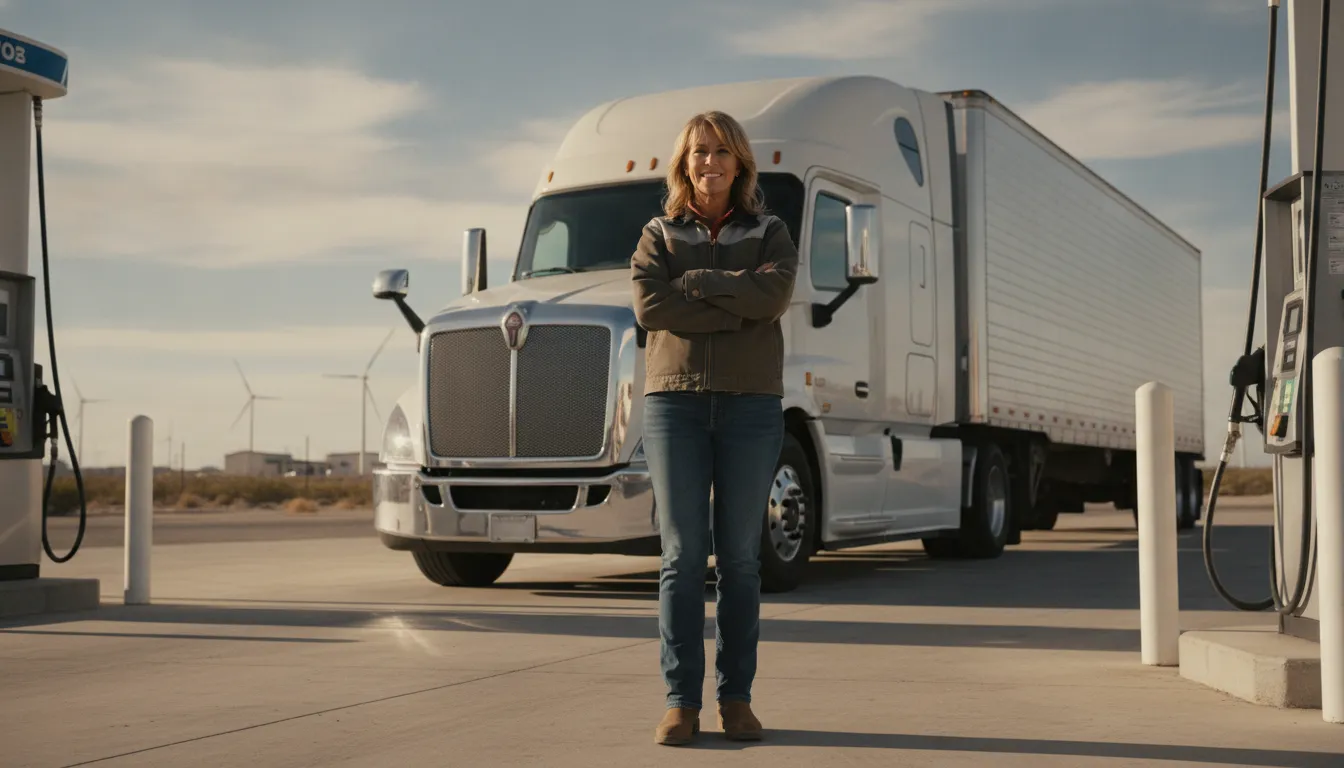
For an owner-operator, the right truck can open the door to steadier routes, new contracts, and a stronger business. The challenge is choosing financing that fits the truck, your cash flow, and the working capital you still need for fuel, insurance, and repairs.
Check for truck financing pre-approval with a Lyft Capital financing specialist today.
Commercial truck financing can help you purchase a new or used vehicle through a loan or lease. With approval decisions shaped by factors such as time in business, credit history, revenue, and the truck’s age and condition. Options may include equipment financing options that cover up to 100% of eligible costs with no down payment, subject to approval and review.
Before comparing monthly payments, consider whether ownership or flexibility matters more, how much cash you can commit upfront, and which documents a lender will need. Understanding those tradeoffs starts with a clear definition of what this type of financing covers and how it works.
What Is Commercial Truck Financing?
Commercial truck financing is business funding used to purchase or lease a truck that supports income-producing work. For an independent owner-operator, that may mean acquiring a semi-truck for hauling freight, a box truck for local deliveries, or another commercial vehicle tied directly to the business. Instead of paying the full cost upfront. You use a financing arrangement to spread repayment over an agreed term while keeping cash available for fuel, insurance, maintenance, permits, and other operating needs.
The financing may be structured as an equipment loan, a lease, or another business financing solution. With an equipment loan, the business generally works toward owning the truck after completing the repayment term. A lease may reduce the upfront cash required and can provide different options at the end of the agreement. The right structure depends on how long you plan to keep the vehicle. How predictable your revenue is, and whether preserving working capital matters more than building ownership in the asset.
Commercial truck financing is different from a consumer auto loan because the vehicle is being evaluated as part of a business operation, not simply as personal transportation. Lenders may consider the truck’s intended use, condition, age, value, and ability to support revenue. They may also review the business’s financial performance and cash flow. Requirements commonly vary based on time in business, credit history, and annual revenue, so two owner-operators seeking the same truck may receive different options. Nav’s overview of commercial vehicle financing explains why these business factors matter.
What can commercial truck financing cover?
Some programs are designed specifically for equipment purchases, while others may support broader business needs. The SBA states that its 7(a) loan program can be used for purchasing and installing machinery and equipment. Which may include commercial trucks when the request meets program and lender requirements. The SBA’s 7(a) loan guidance outlines the program’s permitted uses and eligibility details.
Lyft Capital’s equipment financing options can cover up to 100% of equipment costs with no down payment requirement. That does not mean every applicant receives identical terms or automatic approval. Your financing specialist will review the business, the truck, and the requested amount before explaining available options. Comparing the full repayment obligation, ownership terms, and remaining cash cushion can help you choose funding that supports the business beyond the day the truck is purchased.
Equipment Loan vs Equipment Lease for Commercial Vehicles
Choosing between an equipment loan and an equipment lease affects more than your monthly bill. It also determines who owns the commercial vehicle, how much control you have at the end of the agreement, and how easily you can refresh your fleet. A loan may be the better fit when building long-term business assets matters. A lease may make more sense when preserving cash flow and replacing vehicles regularly are higher priorities.
With an equipment loan, you generally build equity as you repay the balance and own the vehicle when the term ends. Leasing usually leaves ownership with the lessor, but it may provide lower monthly payments and flexibility when the term expires. The right choice depends on your revenue cycle, expected mileage, maintenance plans, and how long you expect to keep each truck. Review your commercial truck financing options before committing to a structure.
| Consideration | Equipment loan | Equipment lease |
|---|---|---|
| Ownership | Your business owns the vehicle after the loan term is completed. | The lessor generally retains ownership, subject to the agreement’s end-of-term terms. |
| Monthly payment | Payments may be higher, but part of each payment builds equity in the asset. | Payments may be lower, which can help preserve cash for fuel, payroll, and other operating needs. |
| Down payment | A lender may require an upfront contribution based on the application and risk profile. | Upfront costs vary by lease structure and provider, so compare the full agreement rather than one payment. |
| Maintenance | Your business is responsible for maintaining an owned vehicle and planning for repairs. | Some lease arrangements may offer maintenance support, and newer vehicles can reduce maintenance exposure. |
| Fleet flexibility | Best when you want to keep, sell, or continue using the vehicle after repayment. | Useful for businesses that update fleets regularly for newer technology and potentially lower maintenance costs. |
| Best for | Operators focused on ownership, equity, and long-term use of a specific truck. | Businesses prioritizing cash-flow flexibility, predictable replacement cycles, or frequent fleet updates. |
Before comparing offers, look beyond the advertised payment. Ask how mileage, wear, maintenance, early termination, purchase options, and end-of-term conditions affect your total cost and operating plans. An owned truck can become a valuable business asset, while a lease can help you avoid being tied to aging equipment. The commercial truck financing options you consider should support both today’s cash flow and tomorrow’s capacity.
For an independent review of commercial vehicle financing structures, see Fit Small Business’s overview of commercial auto financing. These resources can help you prepare questions for a financing specialist before choosing between ownership and flexibility.
Qualification Requirements for Owner-Operators
Lenders look at the full operating picture, not just the truck you want to purchase. For an owner-operator, that usually means reviewing how long the business has been active. Whether revenue is consistent, how credit has been managed, and whether the requested vehicle fits the business’s cash flow. There is no single approval threshold that applies to every financing program, so a conversation with a financing specialist can help you understand which options match your situation.
Time in business and revenue
Time in business helps a lender assess operating history and repayment capacity. A newer carrier may still qualify, but it may need to provide more context about contracts, customer demand, or the owner’s experience in the industry. An established business can typically support its application with a longer record of deposits, expenses, and completed work.
Revenue matters because the lender needs to understand whether the proposed payment fits alongside fuel, insurance, maintenance, payroll, and other operating costs. Bring current monthly or annual revenue information, and be prepared to explain seasonal swings or a recent change in volume. A strong month alone does not tell the whole story. Clear records make it easier to distinguish temporary fluctuations from a sustainable ability to repay.
Credit and personal responsibility
Personal and business credit may both be considered, depending on the lender and the structure of the application. Stronger credit can improve approval odds and may help you qualify for more competitive rates. If credit history has setbacks, that does not automatically end the conversation. Reviewing your options for financing your commercial truck can help identify programs that account for more than a single score.
A personal guarantee is often required, particularly when the business has limited operating history. This is a serious commitment, and you should understand what it means before signing. Ask who will issue the funding, what obligations appear in the agreement, and how the payment schedule interacts with your expected freight revenue.
Documents to prepare
Detailed documentation can reduce delays and give the lender a reliable view of the business. Commonly requested materials include financial statements, business bank statements, and truck-specific information such as the vehicle’s year, mileage, condition, purchase price, and seller details. Commercial auto financing providers commonly review documentation and vehicle details as part of the application process, as described by Fit Small Business.
Pricing is generally shaped by several factors, including creditworthiness, the truck’s age and condition, and the selected term. Prepare a realistic budget rather than choosing a vehicle based only on the largest amount offered. With complete records and a clear use for the truck. You can compare financing choices more confidently and select a payment that supports the business beyond the next load.
For additional context on credit and commercial vehicle financing requirements, see Nav’s commercial fleet financing guide.
New vs Used Commercial Truck Financing Options
The right truck is not always the newest truck. A new model may offer stronger reliability, a full manufacturer warranty, and a longer useful life. While a used truck may let an owner-operator preserve cash and enter service with a lower purchase price. Your choice should account for both the truck’s condition and how its financing affects cash flow.
Why new trucks can be easier to finance
Lenders generally view a new truck as lower risk because it has less depreciation, less uncertain repair history, and a clearer resale value. As a result, new trucks often qualify for lower rates and longer repayment terms than used trucks. Although the final offer depends on creditworthiness, truck specifications, lender policy, and other underwriting factors. Commercial auto financing guidance from Fit Small Business identifies the truck’s age and condition as factors lenders consider.
For example, a new $180,000 truck could require more capital upfront than a $95,000 used truck. But its warranty and reduced near-term repair exposure may make operating costs more predictable. A longer available term could also spread the purchase cost over more time. That does not make the new truck automatically cheaper. Compare the total financing cost, insurance, expected maintenance, downtime risk, and projected revenue before committing.
When a used truck may fit better
A used truck can be practical when the priority is keeping the initial balance smaller or getting a dependable vehicle without paying for the newest features. On a $95,000 purchase, a 10% down payment would be $9,500, while the same percentage on a $180,000 new truck would be $18,000. Actual down payment requirements and terms vary, and a lender may request more based on the truck’s age, mileage, condition, and your business profile.
Used equipment also calls for careful inspection. Ask for maintenance records, confirm the vehicle identification details, and budget for tires, repairs, and downtime. A lower purchase price can lose its advantage if a major repair interrupts contracted routes. A newer truck’s warranty may reduce that risk, but review exactly what the warranty covers and for how long.
Consider SBA and equipment financing options
SBA 7(a) loans can be used to purchase machinery and equipment, including commercial trucks. And the program’s maximum loan amount is $5 million, subject to program and lender requirements. Review the SBA 7(a) loan details before assuming the program fits your situation. You can also compare equipment financing options based on the truck, your cash reserves, and your operating needs. A financing specialist can help you evaluate new and used scenarios without treating approval, terms, or funding speed as guaranteed.
Down Payment Requirements and How to Reduce Them
A down payment can affect both the amount you need to bring to the purchase and the cash you have left for operating expenses. For commercial truck loans, down payments commonly range from 10% to 20% or more. The actual requirement depends on the lender’s policy and how it evaluates factors such as your business history, credit profile, and the truck itself. NerdWallet’s semi-truck financing guide notes that lenders usually expect a 10% to 20% down payment.
That range can make a major difference. On a $100,000 truck, a 10% down payment would be $10,000, while 20% would be $20,000. These are examples, not payment quotes or guaranteed terms. Before committing, compare the full financing structure and protect enough cash for payroll, insurance, fuel, repairs, and other costs that keep the truck productive.
Ways to lower your upfront cost
You may be able to reduce the cash required at closing by considering several approaches:
- Ask whether eligible costs can be financed. Some programs can include more than the truck purchase alone, such as approved equipment or related acquisition costs. Confirm what the lender will finance and whether adding costs changes the overall terms.
- Strengthen your credit profile. Paying obligations on time, reducing outstanding balances, and correcting inaccurate credit-report information can improve your financing position. A stronger credit profile may help you qualify for more competitive industry rates, although approval and terms remain subject to review.
- Compare used trucks. A well-maintained used truck may have a lower purchase price, which can reduce the dollar amount of any required percentage down payment. Balance the lower acquisition cost against inspection findings, maintenance history, truck age, and potential repair needs.
- Use a trade-in. The equity in an existing vehicle may help offset part of the upfront requirement. Ask for a clear valuation and confirm how the trade-in credit is applied.
- Evaluate leasing. Leasing may require less upfront capital in some structures, but the lessor generally retains ownership. Review mileage limits, maintenance responsibilities, end-of-term options, and total cost before choosing it.
Keep working capital available
Putting every available dollar into a down payment can leave an owner-operator exposed after the purchase. Working capital financing may help manage fluctuating fuel, maintenance, and insurance costs. Separating truck acquisition funding from operating cash can make the business more resilient during slower weeks or unexpected repairs.
Lyft Capital’s equipment financing may cover up to 100% of equipment costs with no down payment requirement, subject to approval and review. SBA and other equipment financing programs may also reduce the upfront burden for eligible businesses. Compare your options with a specialist, and review this guide to financing solutions for commercial trucks before selecting a structure.
How to Apply for Commercial Truck Financing
- Assess your budget and cash flow. Start with the truck’s purchase price, expected monthly payment, insurance, fuel, maintenance, registration, and other operating costs. Compare that total with realistic business revenue, not your best month. Keeping working capital available can help you manage expenses after the purchase instead of committing every available dollar to the truck.
- Decide whether a loan or lease fits your operation. A loan may be the better choice if you want to build equity and own the truck after repayment. A lease can make sense if preserving cash flow, changing vehicles regularly, or limiting maintenance responsibility matters more. Consider expected mileage, how long you plan to keep the vehicle, and whether ownership has strategic value for your business. The loan-versus-lease distinction is explained further by Fit Small Business.
- Research lenders and financing products carefully. Compare commercial truck financing products, eligibility requirements, repayment structures, collateral expectations, and application processes before committing. Do not evaluate an offer by its advertised payment alone. Research the lender’s experience with commercial vehicles and ask how truck age, condition, credit profile, and term affect the available terms. You can also review Lyft Capital’s equipment financing options as part of your comparison.
- Gather the required information. Prepare recent financial statements, business bank statements, and truck-specific details such as the make, model, year, mileage, purchase price, and seller information. Having these materials ready can reduce back-and-forth and help a financing specialist understand the request. Additional requirements may vary based on the lender, vehicle, and business profile.
- Compare complete offers, not just headline numbers. Review the repayment term, required down payment, payment schedule, collateral, personal guarantee provisions, documentation requirements, and any conditions attached to the offer. Lyft Capital describes available terms as competitive industry rates, but specific pricing depends on your application and review. Ask questions about anything you do not understand before accepting.
- Apply for pre-approval. Pre-approval may be available in minutes, subject to approval and review. It can help you understand your potential purchasing range before negotiating with a truck seller. To begin, submit an application through Lyft Capital’s online application. A financing specialist can help clarify which product may fit your circumstances.
- Review the funding agreement before signing. Confirm the final amount, repayment obligations, security interests, conditions, and any required insurance or vehicle documentation. The funding issuer will be identified in the funding agreement, so verify that detail and keep a complete copy for your records. Funding may be available as fast as 24 hours, subject to approval and review, but timing is not guaranteed.
Talk to a Lyft Capital financing specialist about your truck financing options today.
Frequently Asked Questions
How much is a $70,000 truck payment?
There is no single payment for a $70,000 truck. The amount depends on the term, down payment, credit profile, truck age and condition, and the lender’s offered rate. A longer term may reduce the monthly payment but increase the total cost over time. Request a financing review using the truck price and your expected revenue cycle so you can compare an affordable payment with the cash you need for fuel. Maintenance, insurance, and other operating costs.
Do you have to put 20% down on a commercial truck?
No. Down payment requirements vary by lender and risk profile, and commercial truck loans may require 10% to 20% or more. Source: NerdWallet’s semi-truck financing guide. Lyft Capital equipment financing may cover up to 100% of equipment costs with no down payment requirement, subject to approval and review. Keeping cash available for operating expenses can be as important as reducing the amount financed.
How much would payments be on a $40,000 truck?
Payments depend on the same factors as any truck purchase, including the amount financed, term, creditworthiness, and vehicle condition. Instead of relying on a generic calculator, ask for a quote based on the specific truck, proposed down payment, and business financials. This gives you a more useful estimate and helps you test whether the payment fits slower revenue periods.
Is it easier to finance a new or used commercial truck?
Neither option is automatically easier. New trucks may qualify for longer terms or lower rates because they generally carry less depreciation and repair risk, while used trucks may cost less upfront. Lenders commonly review time in business, credit, revenue, financial statements, bank statements, and details about the truck. Comparing the truck’s purchase price, expected maintenance, and useful life can help you choose responsibly.
Ready to Explore Your Commercial Truck Financing Options?
A financing specialist can help you compare loan and lease considerations, review your circumstances, and identify an approach that fits your business goals. Talk to a Lyft Capital financing specialist and check for pre-approval.


0 Comments