

A new ultrasound system, sterilizer, or digital imaging device can improve patient care and expand your services. But paying the full cost upfront can put pressure on payroll, supplies, and everyday operating cash. That challenge is especially real for smaller practices with limited reserves. Research from Harvard Medical School notes that many primary care practices lack the resources to withstand a prolonged drop in revenue.
Talk with a Lyft Capital financing specialist about your equipment funding options.
Medical equipment financing for small practices can spread the purchase cost over time. Helping you acquire needed equipment while preserving cash flow for patient care and other business expenses. Lyft Capital offers equipment financing with no down payment required and terms of up to five years, subject to approval and review.
For a growing practice, the barrier is rarely the equipment itself. It is the upfront cost, which can rival months of net income when a single instrument such as an imaging unit can run well into five figures. Spreading that cost across predictable monthly payments keeps working capital available for staffing, supplies, and the everyday expenses that keep a practice running smoothly.
The right approach depends on the equipment you need, how it will support your practice, and whether ownership or another funding structure fits your plans. Start by looking at the types of medical equipment that may qualify, then compare your options with a specialist who understands the needs of independent practices.
What Medical Equipment Can Be Financed?
Medical equipment financing for small practices can cover much more than one high-cost diagnostic machine. It may help a practice acquire the clinical tools, technology, furnishings, and support systems needed to improve patient care without using all of its working capital at once. The right financing package depends on the equipment, the practice’s cash flow, and the expected business benefit.
Diagnostic and imaging equipment
Diagnostic equipment is a common financing need for medical and dental practices. Eligible purchases may include digital X-ray systems, ultrasound machines, CT equipment, magnetic resonance imaging equipment, and dental cone-beam computed tomography, or CBCT, scanners. Imaging devices can also include specialized cameras, monitors, and related technology used to capture, review, or share patient images.
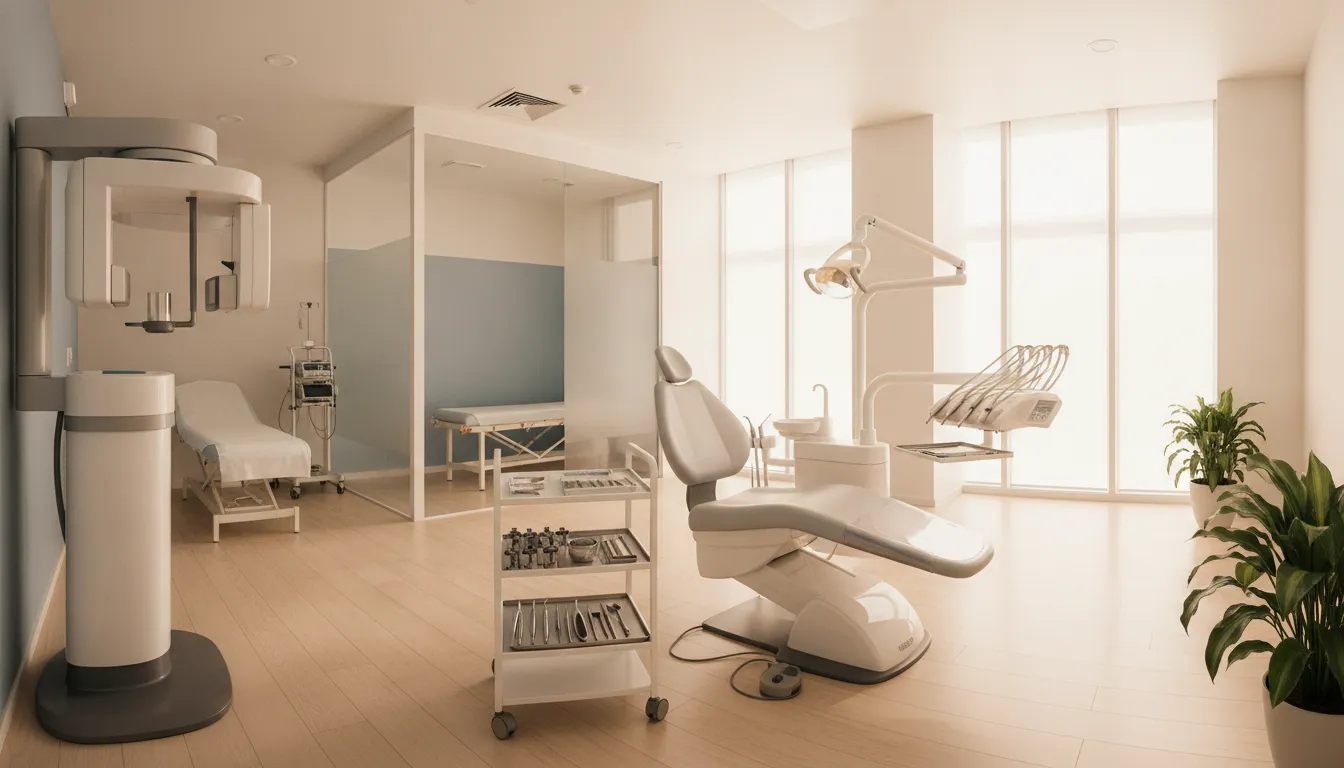
For a dental office, a CBCT scanner may support more detailed treatment planning. For a primary care or specialty practice, updated imaging equipment may reduce referrals, improve workflow, or expand the services offered in-house. Those operational benefits matter when explaining how the purchase may support revenue or cost savings.
Furniture, software, and treatment-room equipment
Financing can also apply to the equipment patients and staff use every day. Examples include powered exam tables, treatment chairs, dental chairs, delivery systems, surgical instruments, and ophthalmology tools. Practices may also finance patient-monitoring equipment, such as vital-sign monitors and other devices used during examinations or procedures.
Technology is another important category. Depending on the provider and package, a practice may seek financing for electronic medical record or practice-management software, along with compatible hardware and implementation costs. Lab equipment, sterilization systems, autoclaves, and other infection-control equipment may also be considered. A financing specialist can help determine whether a planned purchase fits the program before the practice commits to an order.
How the financing can be structured
Lyft Capital’s Equipment Financing requires no down payment and offers terms of up to five years, subject to approval and review. Spreading repayment over time can help a practice preserve cash for payroll, supplies, rent, and other operating needs while putting the equipment to work. Owners can review options through medical equipment financing for small practices and discuss the purchase with a financing specialist.
Before applying, outline what the equipment will do for the practice. The U.S. Small Business Administration recommends describing expected revenue increases or cost savings when discussing equipment financing. That preparation can make it easier to compare options and choose a repayment structure that fits the practice’s actual cash flow.
Why Small Practices Turn to Medical Equipment Financing Instead of a Bank
A bank may view a small medical practice through a narrow set of risk measures: personal credit, time in business, tax returns, available collateral, and cash reserves. That approach can miss the practice’s ability to generate revenue from a new imaging system, surgical tool, treatment chair, or other equipment. It can also create a difficult timing problem. A practice may need equipment now to serve patients or keep pace with competitors, while a conventional loan decision takes weeks.
Strict credit and cash-reserve requirements
Traditional lenders generally want strong credit, consistent historical income, and enough liquidity to absorb a downturn. Those requirements can be challenging for newer practices, owners who invested heavily in opening or expanding, and established practices with uneven seasonal revenue. A practice can be fundamentally viable while still showing limited cash reserves on a balance sheet.
That vulnerability is well documented in primary care. Harvard researchers noted that many primary care practices lack the financial resources to withstand a prolonged drop in revenue, particularly when patient volume falls. Harvard’s analysis helps explain why a temporary slowdown can make an otherwise capable practice appear riskier to a bank.
Administrative costs make the numbers harder to manage
Medical practices also carry costs that businesses in many other industries do not face to the same degree. Insurance verification, prior authorizations, claims follow-up, denials, and payment delays consume staff time and put pressure on working capital. Brookings testimony describes the administrative costs health care providers incur when interacting with health insurers. A burden that can strain finances before a practice even considers a major equipment purchase. The Brookings testimony provides context for this challenge.
Slow decisions do not match clinical needs
Conventional bank lending often involves extensive documentation, multiple review layers, and a decision timeline that does not fit an urgent replacement or growth opportunity. Internal approval rates for small-business bank applications are commonly cited in the 13% to 22% range. While Lyft Capital reports a 92.5% approval rate across most alternative financing applications. Neither figure guarantees approval for an individual practice, but the contrast shows why owners often explore more than one source.
Medical equipment financing for small practices can offer a more asset-focused path. The equipment may serve as collateral. Allowing the provider to evaluate the purchase alongside the practice’s revenue and cash flow rather than relying only on a personal credit profile. Terms and approval remain subject to review, but comparing this option with a traditional loan can help a practice preserve cash while obtaining the equipment it needs.
Qualification Requirements for Medical Equipment Financing
Qualification for medical equipment financing for small practices is usually based on the strength of the practice and the usefulness of the equipment. Not on a single credit-score cutoff. A lender may review your time in business, monthly revenue, cash flow, existing obligations, and the equipment you plan to purchase. The goal is to understand whether the equipment supports a realistic repayment plan while leaving enough cash for payroll, supplies, rent, and patient care.
The equipment can strengthen the application
With equipment financing, the asset itself often serves as collateral. That gives the financing provider a specific asset connected to the request and can make qualification more flexible than it may be for an unsecured loan. A practice purchasing a $40,000 ultrasound system, for example. May be evaluated on the system’s role in expanding services and generating revenue, as well as on the practice’s financial history. The equipment does not eliminate the need for review, but it can give the application additional structure.
Be prepared to explain how the purchase will benefit the practice. If a $25,000 sterilization system is expected to increase appointment capacity or reduce outsourced processing costs, show how that change may affect monthly cash flow. Clear projections, recent bank statements, revenue records, and basic business information help a lender evaluate the request more efficiently.
Revenue and cash flow can matter more than perfect credit
Alternative lenders may place greater weight on practice revenue and cash flow than on the owner’s personal credit score. That can create a path for established practices with consistent deposits but imperfect personal credit. Flexible credit requirements do not mean credit is ignored. They mean the application is considered in context, alongside operating performance and the practice’s ability to support the payment.
For instance, a practice bringing in $50,000 per month may have a stronger financing profile than a newer practice with a higher credit score but inconsistent revenue. The actual amount, terms, and approval decision depend on the full review. Never assume that a specific revenue level guarantees approval, and ask a financing specialist which records are needed for your situation.
No down payment and a faster review
Lyft Capital offers Equipment Financing with no down payment required, helping practices preserve working capital for everyday needs. Lyft Capital serves medical practices among small businesses in more than 300 industries nationwide. Pre-approval may be available in minutes, with funding potentially available within 24 hours, subject to approval and review. These timelines are not guarantees, but they can be useful when a critical device fails or an opportunity requires timely action.
If equipment payments would not align with your collections cycle, revenue-based financing may be another option to discuss. A specialist can compare the available structures and help determine whether equipment financing or an alternative better fits your revenue pattern and planned purchase.
Equipment Financing vs Practice Acquisition Loans
The right financing structure depends on what you are buying and how directly it will support your practice. Medical equipment financing for small practices is generally designed around a specific asset, such as an imaging system, dental chair, ultrasound machine, or sterilization equipment. A practice acquisition loan serves a broader transaction, such as purchasing an established practice, buying a partner’s share, or funding a major expansion.
| Consideration | Equipment financing | Practice acquisition loan |
|---|---|---|
| Primary purpose | Purchases a specific piece or set of medical equipment. | Funds the purchase of an existing practice, ownership interest, or larger expansion. |
| Ownership | You purchase the equipment and own it outright after satisfying the financing agreement. | You acquire ownership of the practice or business interest, subject to the loan structure and transaction terms. |
| Security | The financed equipment may serve as collateral, tying the security to the asset being purchased. | The lender may evaluate the practice, its cash flow, assets, borrower experience, and the overall acquisition. |
| Funding size and review | Usually narrower in scope, with underwriting focused on the equipment and the practice’s ability to repay. | Often involves larger sums, business valuation, financial statements, projections, and more extensive underwriting. |
| Speed and cash-flow impact | Can be faster and may preserve working capital by spreading the equipment cost over time. | Typically takes longer to arrange because the lender is reviewing a complex ownership or expansion transaction. |
The ownership distinction matters. The U.S. Small Business Administration explains that financing means purchasing the equipment and spreading its cost over several years. While a lease generally means paying to use an asset that the lender owns. Review the agreement carefully so you understand whether your practice will own the equipment, when ownership transfers, and what happens at the end of the term. The SBA also recommends comparing providers instead of assuming your bank or the manufacturer’s captive finance company offers the best rates, fees, terms, or options.
Choose equipment financing when one clearly defined asset can improve capacity, efficiency, or patient service without requiring the cost and complexity of an acquisition. Consider an acquisition loan when the goal is to buy an operating practice or make a substantial ownership change. A financing specialist can help compare the amount, repayment structure, collateral, and timing against the investment your practice is actually making.
Tax Benefits of Equipment Financing for Medical Practices
Equipment financing can offer more than a way to obtain a needed asset without draining the practice bank account. Because financing generally involves purchasing the equipment and paying for it over time, the practice owns the asset rather than simply paying for temporary use. The U.S. Small Business Administration explains that financed equipment remains the buyer’s property during and after the payments, while leased equipment is typically owned by the lender. That ownership distinction can affect how your practice evaluates depreciation, deductions, and long-term value.
Ownership may support depreciation
When a practice purchases qualifying equipment through financing, it may be able to depreciate the asset over its useful life. Depreciation can spread the equipment’s cost across multiple tax years instead of treating the entire purchase as an immediate expense. The actual treatment depends on the equipment, the business’s tax situation, when the asset is placed in service, and current tax rules. Your CPA or tax professional should determine whether the equipment qualifies and how the deduction should be calculated.
Some practices may also explore the Section 179 expensing concept. In eligible circumstances, Section 179 may allow a business to expense some or all of the cost of qualifying equipment in the year it is placed in service. Subject to federal limits, income restrictions, and other requirements. Those rules can change, and the most useful election for one practice may not be appropriate for another. Treat Section 179 as a question to raise with your tax advisor, not as a guaranteed benefit of every financing agreement.
Interest and cash flow deserve equal attention
Depending on the agreement and applicable tax rules, the interest portion of equipment financing payments may be deductible as a business expense. Principal and interest are not treated the same way, so keep a clear payment schedule and ask your accounting professional how each portion should be recorded. Lyft Capital does not provide tax advice, and financing terms should be reviewed with both a financing specialist and your CPA before you commit.
Fixed payments can also make budgeting easier. A predictable monthly obligation helps an owner model cash flow while preserving working capital for payroll, supplies, rent, insurance, and unexpected repairs. That can be especially important when patient volume fluctuates or administrative costs place pressure on a small practice’s reserves. The right structure should fit the equipment’s expected useful life and the revenue it is expected to support.
For practices comparing options, medical equipment financing for small practices can be a starting point for discussing ownership, payment structure, and current competitive industry rates. Compare providers and review the funding agreement carefully, then confirm the tax implications with a qualified professional.
How to Apply for Medical Equipment Financing
A focused application helps a financing specialist understand both the equipment you need and the business case behind it. That preparation can make medical equipment financing for small practices easier to evaluate, especially when your practice has strong revenue but limited cash reserves.
-
Define the equipment need and its business impact
Start with the equipment itself. Identify what you plan to purchase, why the current setup is no longer adequate, and how the upgrade will affect day-to-day operations. Then connect the purchase to measurable business outcomes. Will it allow you to serve more patients, add a billable service, reduce outsourcing, shorten appointment times, or lower maintenance costs? The SBA recommends being ready to explain projected revenue increases and cost savings that the equipment may create. A concise projection gives the provider context beyond the purchase price.
-
Gather your practice financials
Prepare the financial information a provider may use to assess repayment capacity. This generally includes recent revenue figures, cash-flow information, and other records that show how money moves through the practice. Organize the information before applying so you can answer questions consistently. If revenue varies by season, payer mix, or procedure volume, be prepared to explain those patterns. Clear records help the specialist evaluate the practice as it operates, rather than relying on a single snapshot.
-
Compare financing providers
Do not assume your bank or the equipment manufacturer’s captive finance company offers the best fit. The SBA advises comparing available rates, lease terms, fees, and options. Look at the full structure, including ownership, repayment flexibility, collateral expectations, and how well the payment aligns with projected cash flow. Comparing providers can also help practices identify an option that considers business performance when personal credit is imperfect.
-
Submit a pre-approval request
Once your information is ready, submit a pre-approval request to the provider you want to evaluate. Lyft Capital offers pre-approval in minutes and funding within 24 hours, subject to approval and review. A pre-approval is not a guarantee, but it can clarify potential next steps before you commit to an equipment order.

-
Review the agreement with a financing specialist
Before accepting an offer, ask a financing specialist to walk through the repayment amount, term, fees, ownership structure, and any conditions tied to funding. Confirm that the proposed payment is sensible for your expected cash flow, including slower months. Also verify which company will issue the funds. The funding issuer should be identified in the funding agreement. When the terms are clear, you can apply online or schedule a consultation to discuss your practice’s options.
Talk to a Lyft Capital financing specialist about your equipment options today.
Frequently Asked Questions
What types of equipment can be financed for medical practices?
Depending on the lender and the practice’s needs, financing may cover diagnostic tools, imaging systems, exam tables, surgical instruments, dental or specialty equipment, technology, and other business-use assets. A financing specialist can review the equipment quote, its expected use, and the practice’s cash flow to help identify an appropriate structure.
Can small practices get medical equipment financing with bad credit?
Possibly. Alternative financing providers may consider the practice’s revenue, cash flow, time in business, and the value of the equipment alongside personal or business credit. Approval is not guaranteed, but a less-than-perfect credit history does not automatically end the conversation. Be prepared to explain recent financial performance and how the equipment will support operations or revenue.
Is a down payment required for medical equipment financing?
Not always. Some Equipment Financing options may cover the full equipment cost without a down payment, while other offers may require money upfront. The amount depends on the application, equipment, provider, and approval terms. Review the total repayment obligation and available working capital before accepting an offer.
Is it better to lease or buy medical equipment for my practice?
Buying may make sense when long-term ownership matters, while leasing can reduce the upfront commitment and may fit equipment that needs frequent replacement. The tax and accounting treatment can differ, so discuss the choice with your accountant. If you finance a purchase, the funding agreement should clarify ownership and identify the funding issuer.
Ready to Explore Medical Equipment Financing?
Upgrading equipment can help your practice deliver care more efficiently and support its next stage of growth. A focused conversation can help you compare your options and identify a practical path for upgrading your practice without relying on a traditional bank loan.
Get pre-approved for medical equipment financing and speak with a Lyft Capital financing specialist to review your opportunity. A specialist can walk you through available options, help you understand qualification, and outline the next steps. Any offer, terms, and funding timeline are subject to approval and review.



0 Comments