

Construction revenue rarely arrives at the same pace as expenses. Payroll, materials, equipment repairs, insurance, and project mobilization may come due while an invoice is still waiting for payment. The right funding choice can help you protect working cash without treating every financing need the same way.
Review your construction financing options with Lyft Capital.
Construction business financing can help contractors purchase equipment, cover working capital needs, manage project cash flow, or access revolving funds. With the best fit depending on your revenue pattern, business history, credit profile, and intended use of funds.
Lyft Capital works with small businesses nationwide and offers guidance from dedicated financing specialists. Understanding how each option works, what requirements may apply, and which tradeoffs matter most can make it easier to prepare and choose confidently.
What Types of Construction Business Financing Are Available?
The right construction business financing depends on what needs to be funded, how quickly the money is needed, and how repayment will fit your company’s cash flow. A contractor buying a skid steer has a different need from one covering payroll while waiting for a project invoice. Common options include working-capital loans, revolving credit, equipment financing, Revenue-Based Financing, and SBA programs.
| Option | Good for | Check |
|---|---|---|
| Business Loans | Working capital and operating expenses | Lyft Capital lists substantial funding capacity and terms up to five years. Use and repayment fit should be reviewed before applying. |
| Business Line of Credit | Recurring or unpredictable expenses that arise throughout a project | Provides revolving access to working capital, so it can suit ongoing needs rather than one defined purchase. |
| Equipment Financing | Construction machinery and vehicles | The equipment may serve as collateral. Financing can cover the entire equipment cost without a down payment requirement, subject to approval and product terms. |
| Revenue-Based Financing | Working capital for businesses with revenue that changes with project cycles | Funding is based on business revenue rather than personal credit score. Lyft Capital lists working-capital funding with terms up to two years. |
| SBA programs | Eligible businesses financing real estate, working capital, machinery, equipment, or supplies | SBA 7(a) can support several of these uses. SBA 504 focuses on major fixed assets and cannot be used for working capital or inventory. |
Match the product to the project
Business Loans can provide substantial funding, with terms up to five years and no restrictions on use of funds. Making them a broad option when several operating costs compete for cash. A Business Line of Credit is different because it offers revolving access. Which may be more useful when material orders, subcontractor payments, or repairs arise at different points in a project.
Equipment Financing is more narrowly tied to an asset. It can help preserve cash when a company needs machinery or vehicles to take on work. For longer-term fixed assets, SBA 504 provides long-term fixed-rate financing for major assets that support business growth and job creation. Its proceeds may cover purchasing, constructing, or renovating buildings or land, but not working capital or inventory. SBA 7(a), by contrast, can fund real estate, working capital, debt refinancing, machinery, equipment, furniture, fixtures, and supplies. Review the current SBA 7(a) uses and eligibility rules before treating it as a fit.
These are general product distinctions, not an approval decision. Requirements, available terms, and the funding issuer identified in the agreement can vary by product and applicant. A financing specialist can help compare the purpose, timing, documentation, and expected repayment against your project plan.
How Does Equipment Financing Work for Construction Companies?
Equipment Financing helps a construction company purchase or replace the machinery, vehicles, or technology it needs without exhausting its operating cash. The process generally begins with identifying the equipment, confirming its cost with a vendor invoice. And matching the purchase to a financing structure that the business can manage alongside payroll, materials, and project expenses.
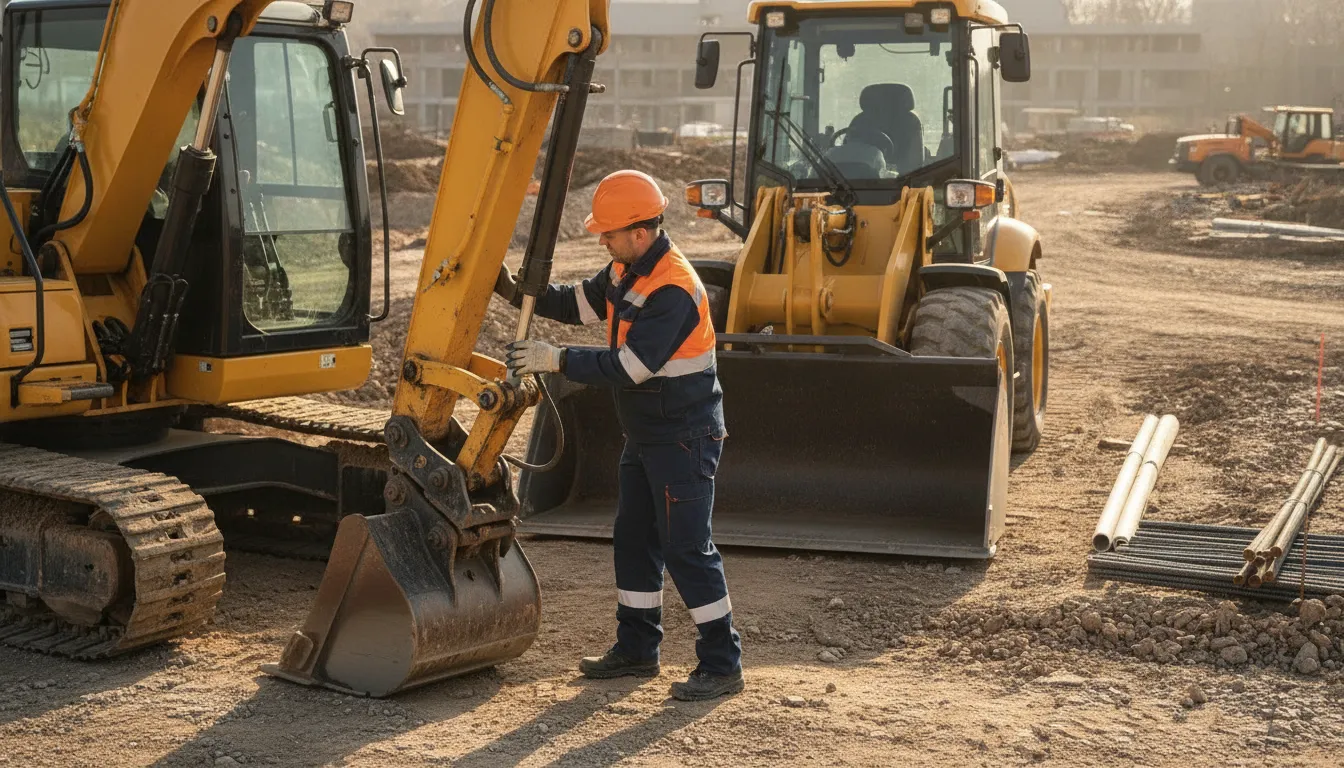
For construction operators, eligible equipment may include excavators, loaders, tractors, trucks, skid steers, dozers, and utility vehicles. The right fit depends on what the business uses, what it is purchasing, and how that asset supports current or upcoming work. A contractor replacing a skid steer has a different funding need from a growing company adding several trucks to support new jobs.
Start with the equipment invoice and the business purpose
An equipment invoice gives the financing specialist a clear view of the purchase being considered. It can help frame the amount requested and keep the conversation focused on the asset, rather than asking for a general pool of money with no defined use. Before applying, review whether the equipment is essential to a contracted job, increases capacity, replaces unreliable machinery, or reduces the need to rent.
Lyft Capital’s small business equipment financing guide offers additional detail on qualifying equipment and application preparation. A specialist can then discuss whether Equipment Financing is appropriate for the purchase and explain the current product terms.
Preserve cash while planning for repayment
Equipment Financing may cover the entire equipment cost without a down payment requirement, subject to approval and product terms. That structure can help a contractor keep cash available for labor, materials, insurance, mobilization, and unexpected repairs. Preserving cash does not remove the obligation to repay, so the expected equipment benefit should be weighed against the payment schedule and the timing of customer receipts.
Equipment loans are commonly repaid through monthly installments on a fixed timeline, often two to seven years depending on the equipment. The purchased equipment may serve as collateral. Ask how the proposed term, payment amount, collateral arrangement, and any conditions would affect the company during slower months or between project invoices. A financing decision should support the operation without assuming every month will produce the same revenue.
What Can Contractors Use Working Capital Financing For?
Working capital helps a contractor keep a project moving when expenses arrive before customer payments. Common uses include covering payroll between billing cycles, purchasing materials, paying insurance premiums, handling fuel and other operating costs, and mobilizing crews or subcontractors for a new job. It can also provide a cushion when an invoice is approved but payment is still weeks away.
Match the funding to the cash-flow need
Business Loans may fit a defined working-capital need that requires access to funds without restrictions on use. Lyft Capital says this product can provide substantial funding, with terms up to five years. That flexibility may help a contractor manage several connected expenses, such as payroll, materials, insurance, and mobilization, through one planned funding request.
Revenue-Based Financing may be worth considering when the business has established revenue but wants an option based on business revenue rather than personal credit score. Lyft Capital says this product can provide working-capital funding, with terms up to two years. Contractors should still review how repayment fits their actual revenue pattern, particularly when projects are seasonal or customer payments vary.
A Business Line of Credit provides revolving access to working capital for ongoing needs. That structure may be useful when the timing or amount of each draw is difficult to predict, such as recurring payroll, material purchases, or short invoice gaps. It can give an established contractor a reusable source of liquidity rather than requiring a new application for every ordinary operating expense.
Separate working capital from fixed-asset financing
Before choosing a product, identify whether the cash is paying for daily operations or a specific long-term asset. Working capital can support labor, materials, project mobilization, insurance, and the period between invoicing and collection. Equipment Financing is designed for machinery and vehicles instead. So using a product for the right purpose can help preserve operating cash and make repayment expectations easier to evaluate.
SBA programs also have different permitted uses. SBA 7(a) loans can fund short- and long-term working capital, while SBA 504 loans cannot be used for working capital or inventory. Product availability, eligibility, and current terms vary, so a financing specialist can help compare the purpose of the funds with the structure that may fit your business.
What Credit and Business Information Do Lenders Review?
Credit matters, but it is not the entire financing decision. A lender may look at your personal and business credit history alongside your financial records, project details, expected cash flow, and the purpose of the funding. That broader view is especially important in construction, where revenue and expenses can move with contracts, draws, materials, and payment schedules.
Credit history is one piece of the picture
Underwriters may review both business and personal credit history to understand how financial obligations have been handled. A less-than-perfect score does not automatically describe your company’s ability to complete profitable work or repay financing. It does, however, help the lender assess risk and determine which products and structures may fit.
There is no single minimum credit score that applies to every construction business financing product. Requirements vary by lender, product, revenue pattern, time in business, collateral, and the strength of the opportunity being financed. Be prepared to discuss both the current credit profile and any circumstances that affected it. Clear context is more useful than assuming one score tells the whole story.
Financial records help show repayment ability
Financial information may include business and personal tax returns, financial statements, credit history, and cash-flow projections. These records help a lender compare money coming into the business with obligations going out. For a contractor, that review can include how payroll, materials, subcontractors, insurance, and other project costs are managed while customer payments are still outstanding.
Organized records also make it easier to explain uneven months. A temporary dip connected to a completed project is different from a persistent inability to cover operating costs. Be ready to connect projections to signed work, realistic project timing, and the way customers pay. The goal is not to make revenue look perfectly consistent. It is to show how the business generates cash and how a proposed payment could fit that cycle.
Project purpose and viability influence product fit
Lenders may assess the project’s viability, risk factors, and future value, not just the applicant’s credit file. Explain what the funding will accomplish: purchasing equipment, covering an operating gap, mobilizing for a contract, or supporting another defined business purpose. A specific use gives the review more context and can help distinguish a short-term cash-flow need from a longer-term asset purchase.
For SBA 7(a) financing, the SBA states that applicants must be creditworthy and demonstrate a reasonable ability to repay. SBA guidance also says eligibility generally considers what the business does, ownership character, operating location, size standards, repayment ability, and a sound business purpose. SBA 504 eligibility has its own requirements, including operating as a for-profit business in the United States, meeting SBA size standards, and not being an ineligible business type.
Because every application combines different facts, requirements can differ even between two contractors seeking similar amounts. Review the business loan requirements before applying, then ask a financing specialist which documents and funding options match your project, cash flow, and credit profile.
How Can Revenue-Based Financing Support Project Cash Flow?
Revenue-Based Financing can help a contractor manage the gap between project expenses and customer receipts by providing working capital based on business revenue rather than personal credit score. That structure may be useful when payroll, materials, subcontractor costs, or mobilization expenses arrive before an invoice is paid. Lyft Capital’s Revenue-Based Financing can provide working-capital funding with terms up to two years, subject to approval and review.

Consider this illustrative example, not a quote: A contractor expects a customer invoice after completing a project phase, but must cover substantial interim costs before payment arrives. Revenue-Based Financing may provide working capital to help bridge that timing gap, allowing the owner to keep the project moving while waiting for collected revenue. The actual amount, structure, eligibility, and repayment terms depend on the business and the financing review.
How the repayment structure affects planning
Revenue-Based Financing is different from a fixed-payment Business Loan. A Business Loan is generally arranged as a defined amount with a scheduled repayment structure and a set term. Lyft Capital’s Business Loans can provide substantial funding with terms up to five years. So this option may be more appropriate when an owner wants a defined financing amount for a planned business need.
Revenue-Based Financing instead evaluates business revenue and is designed for working capital. That can make it worth considering for a contractor whose receipts change from project to project, although variable revenue still requires careful cash-flow planning. Owners should review how payments interact with expected collections before choosing a product. It is also important to match the financing structure to the timing of the need. Project-based construction financing may use loan draws as needed throughout a construction timeline, while RBF is a working-capital product rather than a substitute for every project funding structure.
RBF versus a revolving line of credit
A Business Line of Credit provides revolving access to working capital for ongoing needs. It may fit recurring expenses that arise throughout multiple projects, while Revenue-Based Financing may fit a larger working-capital need tied to revenue and a defined funding period. Neither product is automatically right for every contractor. The best choice depends on whether the need is a one-time project gap, repeated access to funds, or a broader planned expense.
Learn more about Revenue-Based Financing and see how revenue-based financing for contractors can relate to project cash-flow planning. A financing specialist can help review the business’s revenue pattern, current obligations, and funding purpose before an application.
How Do You Apply for Construction Business Financing?
A well-prepared application helps a lender understand your projects, cash flow, and intended use of funds. Use this five-step checklist to organize the conversation and compare options responsibly.
- Define the funding purpose. Start with the specific business need. Are you covering payroll or materials while waiting for an invoice, mobilizing for a new project, or purchasing an excavator, loader, truck, skid steer, or utility vehicle? The purpose helps determine whether a Business Loan, Revenue-Based Financing, Equipment Financing, or another product is the right starting point. A clear request is easier to evaluate than a general need for more cash.
- Review product fit and eligibility. Consider how the financing will be repaid and whether the structure matches your revenue pattern. Lyft Capital’s process may consider business revenue, time in business, credit, and other factors, with requirements varying by product. If an SBA option is under consideration, the SBA says applicants apply directly through a local lender. And application documents vary by loan size and the lender’s processing method. You can also review how to get a business loan before comparing offers.
Review your construction financing opportunities with Lyft Capital.
- Prepare the documents. Gather recent bank statements, business financial information, tax records, ownership details, and a concise explanation of the project or expense. Lyft Capital says most products involve reviewing four months of bank statements, along with a simple application and minimal paperwork. For equipment financing, keep the equipment invoice or purchase details available.
- Explain the business and let the lender review it. Be ready to discuss project scope, expected payment timing, current obligations, and how the funding supports repayment. Lender review may assess the application, project viability, risk factors, and future value. A financing specialist can clarify what is still needed rather than leaving you to interpret every requirement alone.
- Read the terms before accepting. Review the total repayment obligation, payment frequency, term, collateral or guarantees, funding conditions, and any draw or use-of-funds limitations. Ask how the proposed payment fits your slow and busy months. Pre-approval decisions may be available in minutes, and funding may be available within 24 hours once approved, but timing remains subject to approval and review. Do not accept until the agreement and issuer are clear.
Review your construction business financing options before the FAQ.
Frequently Asked Questions
What are alternatives to a traditional construction loan?
Alternatives may include Equipment Financing for machinery or vehicles, a Business Line of Credit for recurring working-capital needs. Business Loans for broader project expenses, and Revenue-Based Financing for eligible businesses with revenue-driven cash flow. The right option depends on whether you need a specific asset, flexible access, or funds for general operations.
Can construction financing help pay for equipment?
Yes. Equipment Financing can help fund construction equipment such as excavators, loaders, trucks, skid steers, dozers, and utility vehicles without depleting operating cash. Lyft Capital says the product may cover the full equipment cost with no down payment requirement, subject to approval and product terms. Source: Lyft Capital Equipment Financing.
What information is usually needed to apply?
Be prepared to explain the project or business purpose and provide financial records, credit information, and cash-flow details. Requirements vary by product and lender. For most Lyft Capital products, the process includes a simple application, minimal paperwork, and review of four months of bank statements. Source: Lyft Capital.
How quickly can construction business financing be available?
Timing depends on the product, documentation, and review. Lyft Capital says pre-approval decisions may be available in minutes, while funding may be available within 24 hours after approval, subject to review. These are potential timelines, not guarantees of approval or funding. Source: Lyft Capital application information.
Ready to Explore Your Construction Financing Options?
Construction projects can place pressure on cash flow when payroll, materials, equipment, and customer payments do not align. Reviewing the available options can help you identify a financing approach that fits your business purpose and repayment capacity. Get started by reviewing your construction business financing options and requesting pre-approval. A Lyft Capital financing specialist can help you understand the next steps, subject to approval and review.



0 Comments